Cladding fixed for its weight and height
Cladding is about weight. A thin tile on an inside wall only needs good adhesive. Heavy stone on the outside of a building, especially above the ground floor, needs metal clamps or anchors as well. We decide the fixing method by the material and the height, not by what is quickest.
What this covers
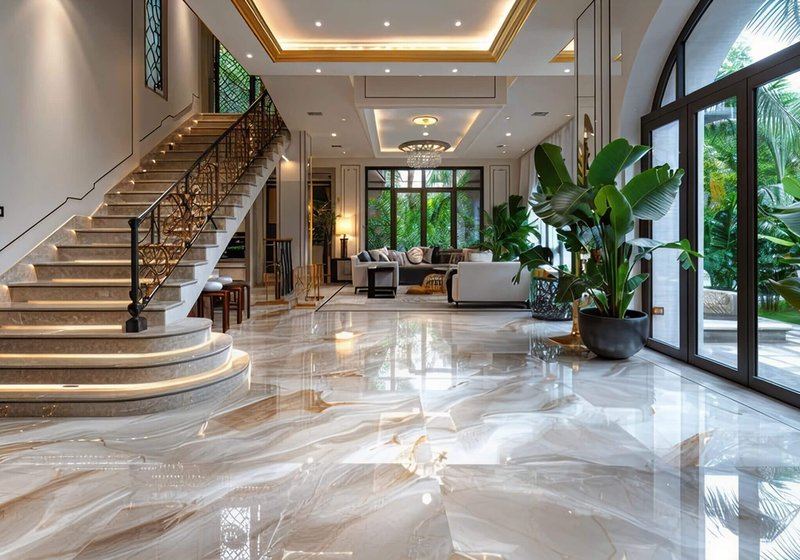
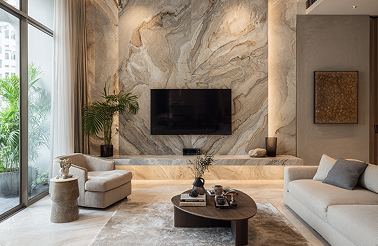
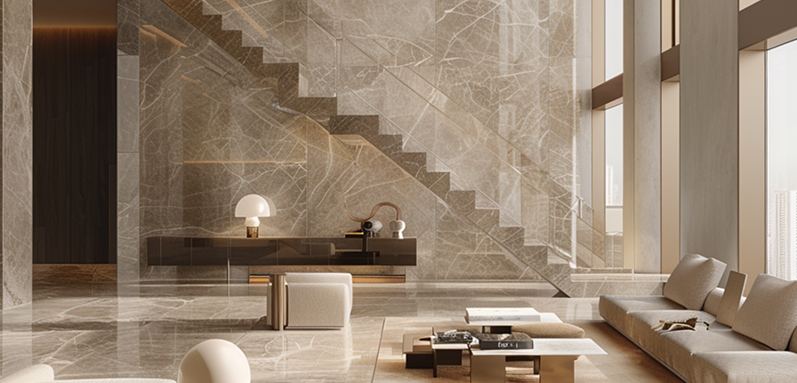
- Marble and large-tile TV and feature walls
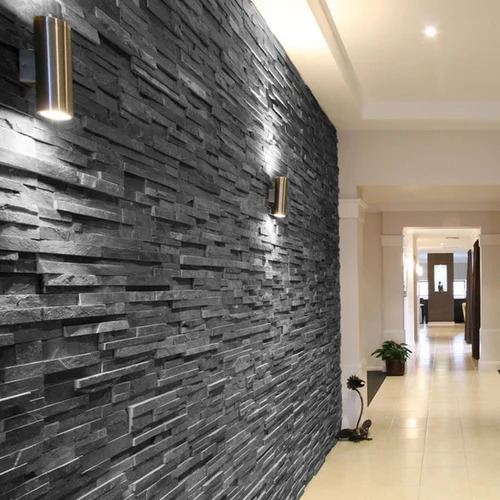
- Stone strips and slate cladding
- Exterior elevation cladding in granite or stone
- Clamp and anchor fixing for heavy stone at height
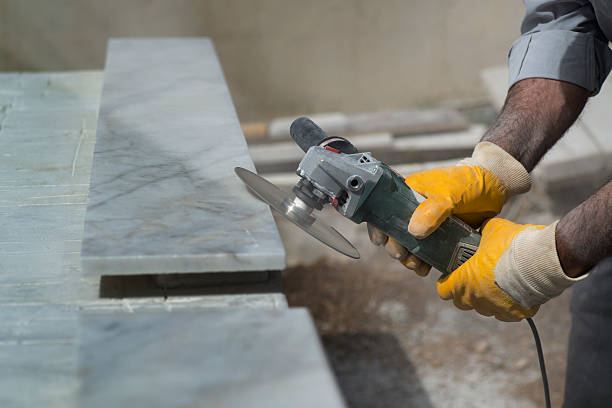
- Mitred corners and clean edges on exposed ends
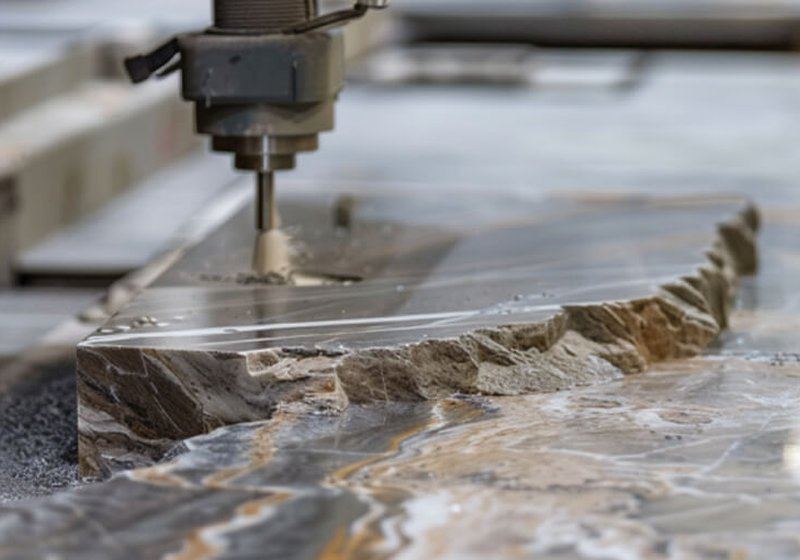
- Cut-outs for switches, lights and niches
How the job runs
-
Check the wall
We check the plaster is sound and plumb. Hollow or painted plaster is opened up and prepared.
-
Mark the layout
Lines are marked so joints run straight and cut pieces fall at the edges, not in the middle.
-
Fix from the bottom
Pieces go up from a level base line, with clamps or anchors where the weight needs it.
-
Finish edges and joints
Exposed corners are mitred or polished, and joints are filled to match.
Common questions
Not when it is fixed properly. For heavy stone above the ground floor we use metal clamps or anchors along with adhesive, so the stone does not rely on glue alone.
No. Paint and putty are scraped off and the plaster roughened first, so the adhesive bonds with the wall itself.
Yes. Mark the points before we start and we cut the openings neatly in the stone or tile.