Tile fixing that stays level and stays put
Most tile problems show up months later: a hollow sound under your feet, a corner that lifts, a joint that keeps collecting dirt. Nearly all of them start with a rushed base or the wrong adhesive. We spend the extra hour there, because that is the part you cannot fix later without breaking tiles.
What this covers
- Vitrified, ceramic, porcelain and GVT/PGVT tiles
- Large slabs like 800x1600 mm and above, laid with levelling clips
- Bathroom floors with proper slope towards the drain
- Kitchen and bathroom wall tiling up to the ceiling
- Skirting, borders and cut pieces around doors and pipes
- Grouting, including epoxy grout where it suits
How the job runs
-
Check the base
We tap the floor for hollow patches, check the level and fix cracks or slopes before a single tile goes down.
-
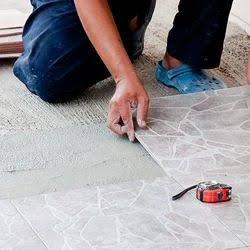
Dry layout
Tiles are laid out loose first so cut pieces fall at walls and under furniture, not in the middle of the doorway.
-
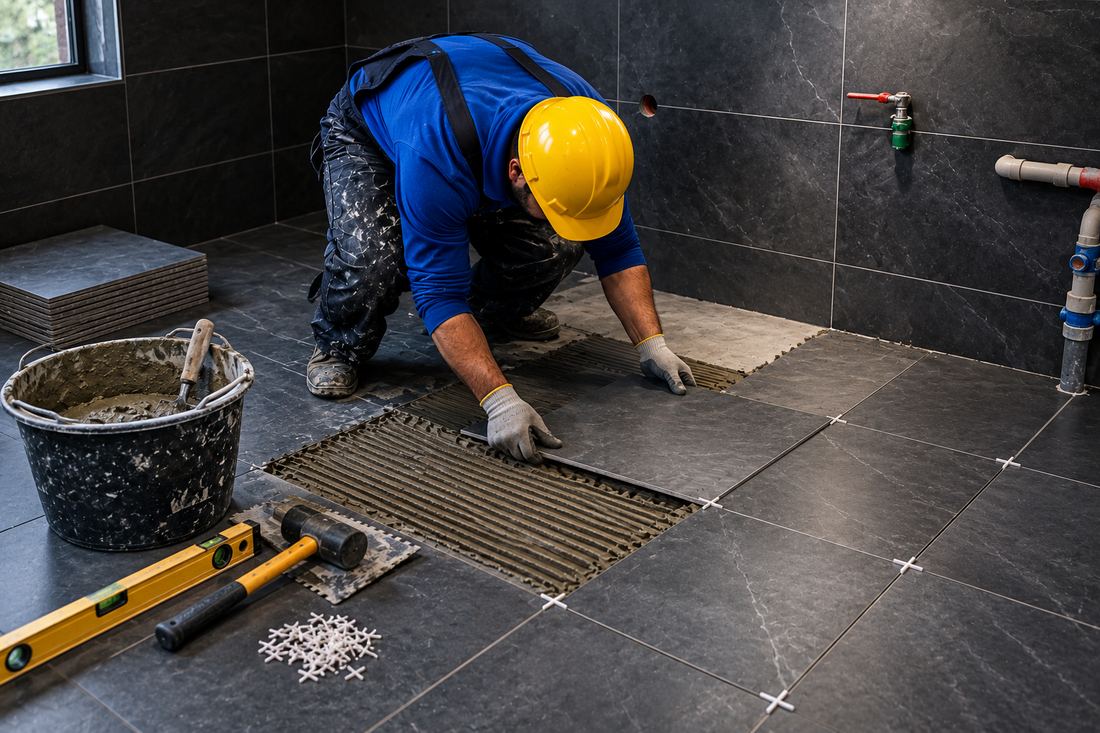
Fix and level
Each tile goes on full adhesive cover. Clips and spacers keep the surface flat and the joints even.
-
Grout and clean
Grouting is done after the tiles set. We wipe down the surface and clear the debris before you see it.

Common questions
For wall tiles and anything larger than about 2 feet, adhesive is the safer choice because it bonds better and does not shrink. For smaller floor tiles on a solid base, cement mortar is fine. We will tell you which one and why before quoting.
Sometimes. If the old floor is level and none of the tiles sound hollow, it can save you the breaking cost. We check door heights too, because the floor will come up by about an inch.
Usually 5 to 10 percent above the actual area, for cutting and breakage. Diagonal and patterned layouts need more. We give you the exact count after measuring so you do not overbuy.